Bone Health Assessment Day Information
A complete guide to hosting a Screen My Bones® Bone Health Assessment Day
This page outlines how Screen My Bones® supports you before, during, and after a Bone Health Assessment day, and what information we require from you to ensure a smooth and successful setup. Our process is designed to minimise admin for your team while delivering a high-quality experience for your clients.
What This Page Covers
By hosting a Screen My Bones® Bone Health Assessment Day, you gain access to a structured, end-to-end process that includes planning support, client communications, booking systems, Bone Health Assessment delivery, and post-Bone Health Assessment follow-up.
Once details are confirmed, our team will prepare the required forms, workflows, and live booking links tailored specifically to your clinic and event.
The Bone Health Assessment Day Process
PLANNING
Select a day, week, or month that aligns with the availability of your client base. If conducting multiple Bone Health Assessment days, consider varying the days and times to provide clients with a range of options that accommodate diverse schedules.
AWARENESS
Ensuring clients are fully aware of the Bone Health Assessment day is crucial for maximising participation and engagement. We’ll provide you with all the information for you to share with your client base.
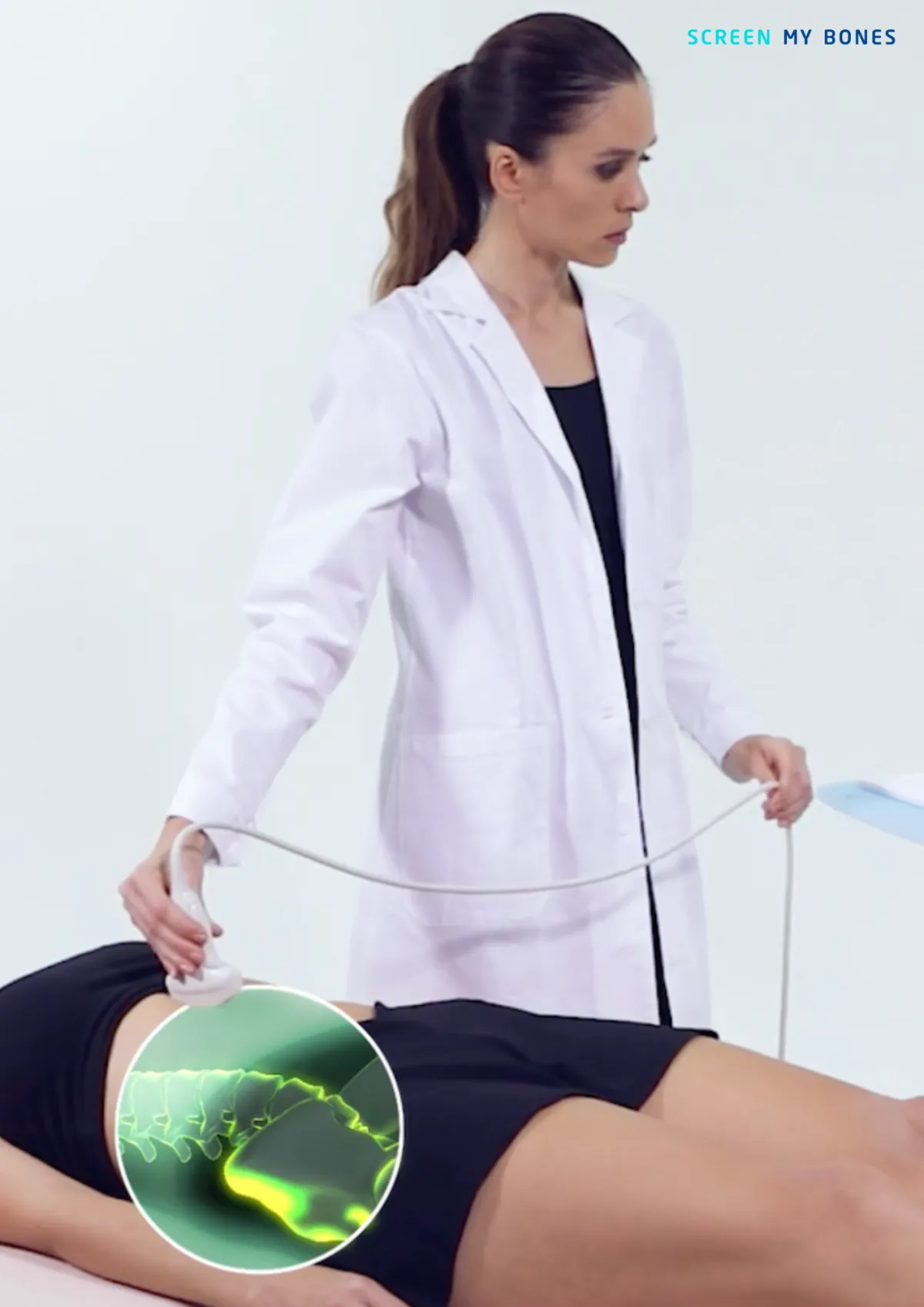
BONE HEALTH ASSESSMENT
The booking confirmation will include all necessary information to help your clients prepare for their appointment. Appointments are scheduled in 30-minute intervals, providing ample time for a thorough consultation with the Bone Health Assessment specialist.
RESULTS
Results will be provided within 3 working days, via email, accompanied by supporting documentation and a video from Dr Doug Lucas to ensure your clients fully understand and can accurately interpret their results.
FOLLOW UP & PATHWAYS
This is the ideal time to re-engage with your client, typically 5+ days after the Bone Health Assessment, once they have had the opportunity to review and understand their results. At this point, we can guide them toward the appropriate pathways available through your services, as well as our own.
CONTINUED SUPPORT
After clients have been guided through appropriate pathways, maintain engagement to support their health journey. Provide follow-up resources, check-ins, and access to additional services to ensure sustained progress and satisfaction. This step reinforces trust and encourages long-term client relationships.
Everything Required for a Bone Health Assessment Day
To ensure a smooth and professional Bone Health Assessment day, the following items should be available and prepared.
🏥 Clinic Setup
Private Room
A quiet, private space suitable for conducting Bone Health Assessments.
📄 Client Disclaimers
Signed Client Disclaimers
Each client must complete and sign the required disclaimer before their assessment.
🖥 Equipment
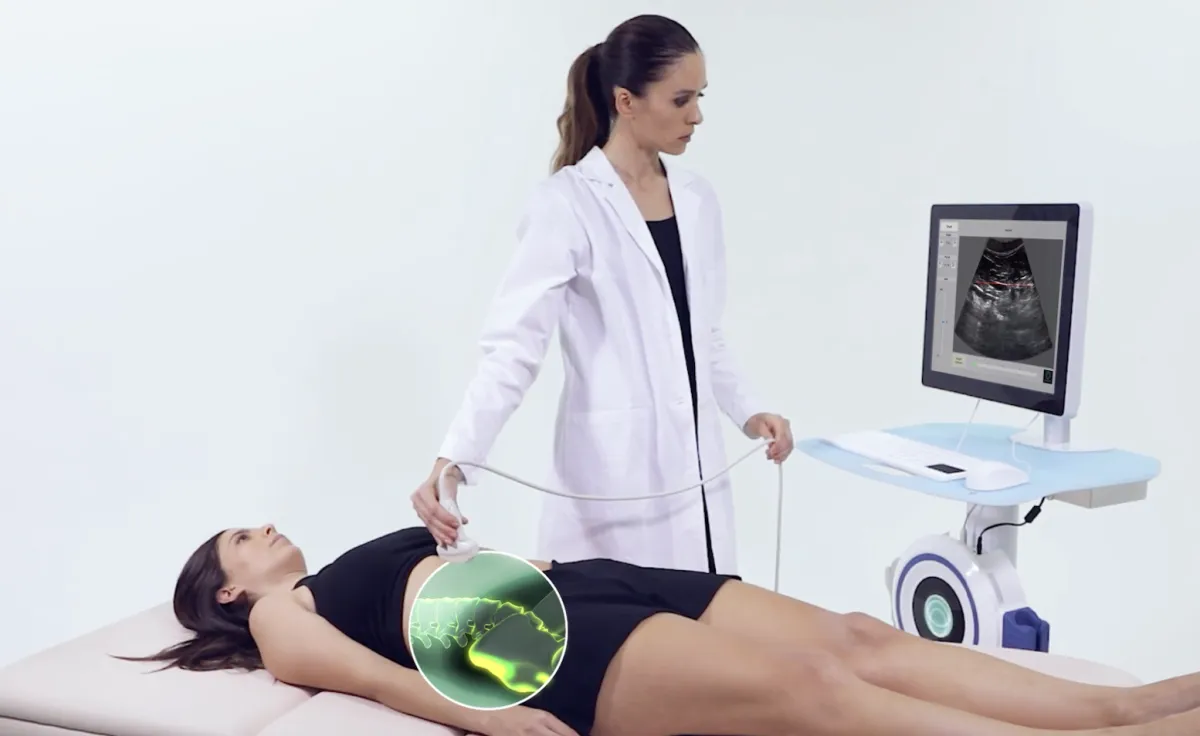
Echolight REMS Machine
The Echolight ultrasound device used to perform the Bone Health Assessment.
⚖️ Measurement Equipment
Weighing Scale
A weighing scale is required to record the client’s weight prior to the assessment as part of the standard information collected during the appointment.
🛏 Assessment Table
Portable Examination Couch / Massage Table
A comfortable and stable table for clients during the assessment.
🧻 Hygiene Supplies
Paper Hygiene Couch Rolls
Disposable couch roll to maintain hygiene between clients.
💧 Ultrasound Gel
Used during the assessment to ensure proper acoustic contact for the ultrasound measurement.
🧼 Cleaning Materials
Universal Cleaning Wipes
Used to sanitise equipment and surfaces between clients.
🧤 Protective Equipment
Gloves
Standard hygiene gloves used during the assessment process.
What We Provide
1. B2C Awareness Email Template
For Your Database: An email template that you can send to your clients, featuring a live link to a waiting list form.
Follow-up Emails: Once bookings go live, an email will be sent to everyone who registered, with a clear call-to-action to "Book Now".
Details: Includes costs, discount codes, and other important information.
2. Informative Videos
Founder’s Story: A personal message from Gary Rhodes, Founder of Screen My Bones, detailing his journey and motivation behind creating the company.
Client Journey Overview: A comprehensive video that explains the entire Bone Health Assessment process from a client's perspective.
3. Promotional Assets
Posters: High-quality posters designed for display in your clinic.
Social Media Graphics: Pre-designed assets ready for sharing on all social media platforms.
Tag us: @screenmybones on Instagram.
Use hashtags: #screenmybones, #bonehealth, #echolight, #longevity, #strongbones.
4. Booking Link
Custom Booking Links: Once Bone Health Assessment dates are confirmed, we will create a unique booking link for each location.
Link Integration: The booking link will be added to the Screen My Bones® live bookings page for easy access.
5. Booking Process
Internal Booking Document: A guide for your team to help clients book and troubleshoot any issues.
Appointment Confirmation: Clients will receive an appointment confirmation email with the "What to Expect During Your Scan" document.
Appointment Reminder: Clients receive an appointment reminder two days prior to their scheduled Bone Health Assessment.
6. Bone Health Assessment Day Details
Duration: 20-minute appointments.
Post-Scan Process: Results are issued through our online Screen My Bones® platform, clients must create their account prior to attending their appointment and will be prompted to do so on the booking confirmation page and through email reminders. They will recieve an email notification between 1-3 days post scan notifying them that their results are now available and to log in and view them. Our platform also contains support, guidance and resources to help them understand the information, their report and bone health. The results will include:
Scan Results PDF
Fragility Score and T-Score
5 Expert Videos from Dr. Doug Lucas, Orthopaedic Surgeon, on bone health and management.
7. Follow-Up & Feedback
Post-Bone Health Assessment Follow-Up: Clients will be contacted for feedback via a form.
Research: Comprehensive research documents will be provided to share with key stakeholders.
8. Privacy Policy and Terms & Conditions
Privacy Policy: https://www.screenmybones.com/privacy-policy
Terms and Conditions: https://www.screenmybones.com/disclaimer
Commercial Framework
For your reference, our Bone Health Assessment day framework is as follows:
Bone Health Assessment Day Fees (inclusive of VAT):
Full Bone Health Assessment day: £2,400
Half Bone Health Assessment day (AM or PM): £1,400
The above fees are fixed charges for the provision and delivery of a Bone Health Assessment day and are inclusive of VAT.
The minimum permissible client price per Bone Health Assessment is £225. Under no circumstances may individual Bone Health Assessmentsbe sold below this amount.
Partner clinics may determine their own client-facing pricing above the minimum threshold, including the application of any additional top-up.
Any discounts or promotional pricing applied are solely at the discretion of the partner clinic and must be absorbed within the clinic’s own pricing structure. No reductions will be applied to the Bone Health Assessment day fee.
Information We Require From You
Submit your clinic and event details and confirm your interest by completing the form below, allowing us to prepare your booking links and workflows
EchoS PLUS Technical Specifications
EchoS PLUS:
EchoS plus includes:
EchoS Main Unit.
Convex Probe.
MOBILITY KIT PLUS:
Carry Workstation Touch 15,6“
Premium Hard Carry Case
Medical Keyboard and mouse
EchoS PLUS Software Applications:
EchoStudio for Application on Lumbar Vertebrae Training & Clinical Modules
EchoStudio for Application on Proximal Femur Training & Clinical Modules
EchoStudio Body Composition:
EchoStudio Body Composition
EchoStudio Fragility Score & Fracture Risk Evaluation:
EchoStudio Fragility Score & Fracture Risk Evaluation
Quality checkKIT:
Quality check Phantom
Quality check Software
1-Year Screen My Bones License Package:
Digital marketing assets
Pre- and post-pathway materials
Access to bone doctors and experts
Advanced Studies in Bone Health
Explorations in Bone Mineral Density, Osteoporosis Diagnosis, and Risk Prediction
This collection of studies brings together a robust and growing body of clinical evidence examining bone mineral density assessment, osteoporosis diagnosis, and fracture risk prediction using Radiofrequency Echographic Multi-Spectrometry (REMS) technology. Across diverse populations and clinical contexts, the research consistently evaluates REMS as a non-ionising, ultrasound-based alternative to dual-energy X-ray absorptiometry (DXA), the current reference standard for bone density measurement.
Collectively, the studies demonstrate that REMS provides bone mineral density measurements at key skeletal sites, particularly the lumbar spine and proximal femur, that show strong agreement and high correlation with DXA-derived values. Importantly, REMS maintains high diagnostic accuracy, sensitivity, specificity, and precision when identifying osteoporosis and osteopenia, including in populations traditionally challenging for DXA assessment, such as individuals with osteoarthritis, obesity, scoliosis, spinal degeneration, or implanted hardware.
Several investigations highlight REMS’ ability to overcome known DXA limitations, particularly the overestimation of lumbar spine bone mineral density caused by degenerative changes, osteophytes, and calcifications. By analysing raw, unfiltered ultrasound radiofrequency signals and automatically excluding structural artefacts, REMS offers a more reliable assessment of true bone status in these settings. This capability is shown to improve osteoporosis detection rates and support earlier clinical intervention.
Beyond cross-sectional diagnostic performance, longitudinal and predictive studies within this collection demonstrate that REMS-derived parameters, including the Fragility Score, are effective in estimating future fracture risk over extended follow-up periods. In several analyses, REMS-based risk indicators perform as well as or better than DXA T-scores in predicting incident fragility fractures, reinforcing the technology’s value not only for diagnosis but also for long-term risk stratification.
The research further supports the clinical applicability of REMS across a wide range of patient groups, including men, postmenopausal women, individuals with chronic kidney disease, pregnant women, and patients with severe motor or intellectual disabilities. The absence of ionising radiation enables repeated assessments and use in populations where DXA is unsuitable or impractical, expanding access to safe Bone Health Assessment.
Overall, the studies presented in this volume establish REMS as a validated, precise, and clinically meaningful technology for bone health assessment. Taken together, they position REMS as a complementary and, in specific contexts, advantageous alternative to DXA for osteoporosis diagnosis, monitoring, and fracture risk prediction within modern clinical practice.
Bone health status evaluation in men by means of REMS technology
This review summarises current evidence showing that REMS is a reliable, radiation-free alternative to DXA for assessing bone density and fracture risk, with particular advantages in accessibility, repeat monitoring, and use in sensitive or hard-to-scan populations.
The Advantages of Radiofrequency Echographic MultiSpectrometry in the Evaluation of Bone Mineral Density in a Population with Osteoarthritis at the Lumbar Spine
This study shows that REMS avoids the overestimation of lumbar spine bone density seen with DXA in people with osteoarthritis, identifying significantly more cases of osteoporosis and supporting earlier, more accurate detection of bone fragility.
Radiofrequency Echographic Multi Spectrometry (REMS) for the diagnosis of osteoporosis in a European multicenter clinical context
This large European multicentre study confirms that REMS accurately diagnoses osteoporosis in women aged 30 to 90 years, showing high agreement with DXA and strong ability to identify patients with bone fragility, without the use of ionising radiation.
Radiofrequency echographic multi spectrometry (REMS) in the diagnosis and management of osteoporosis: state of the art
This review summarises current evidence showing that REMS is a reliable, radiation-free alternative to DXA for assessing bone density and fracture risk, with particular advantages in accessibility, repeat monitoring, and use in sensitive or hard-to-scan populations.
Radiofrequency Echographic Multispectrometry (REMS) can overcome the effects of structural internal artefacts and evaluate bone fragility accurately
This study shows that REMS reduces the impact of artefacts such as vertebral deformities, vascular calcification, diabetes, and osteoarthritis, providing a more accurate assessment of bone fragility than DXA, particularly at the lumbar spine.
A Case Showing a New Diagnostic Aspect of the Application of Radiofrequency Echographic Multi-Spectrometry (REMS)
This case report demonstrates that REMS can simultaneously assess bone density and visually detect occult femoral neck fractures, identifying a fracture missed on X-ray and supporting earlier, more accurate clinical decision-making without ionising radiation.
Short-Term Precision and Repeatability of Radiofrequency Echographic Multi Spectrometry (REMS) on Lumbar Spine and Proximal Femur: An In Vivo Study
This study confirms that REMS provides highly precise and repeatable bone density measurements at the spine and hip, with low operator variability and consistent performance across different body mass index groups.
Fragility Score: a REMS-based indicator for the prediction of incident fragility fractures at 5 years
This large prospective study shows that the REMS Fragility Score predicts future fragility fractures more accurately than DXA or REMS T-scores, enabling better short-term fracture risk identification without ionising radiation.
Radiofrequency echographic multi-spectrometry and DXA for the evaluation of bone mineral density in a peritoneal dialysis setting
This real-world study shows that REMS provides bone density and fracture risk assessments comparable to DXA in patients on peritoneal dialysis, while avoiding lumbar spine overestimation caused by vascular calcifications.
Longitudinal changes of the femoral bone mineral density from first to third trimester of pregnancy: bone health assessment by means of non-ionizing REMS technology
This prospective study shows a small but significant reduction in femoral neck bone mineral density during pregnancy, measured safely with REMS, confirming its suitability for monitoring maternal bone health without ionising radiation.
Radiofrequency echographic multispectrometry compared with dual X-ray absorptiometry for osteoporosis diagnosis on lumbar spine and femoral neck
This large multicentre study shows that REMS accurately diagnoses osteoporosis at the spine and hip, with strong agreement, high sensitivity, and high precision compared with DXA, while using non-ionising ultrasound.
The association between different impact exercises and osteoporosis: an analysis of data from the Taiwan Biobank
This large population study found that high-impact exercise is associated with a significantly lower risk of osteoporosis, particularly in men, while low-impact exercise showed no clear protective effect. The findings support the role of weight-bearing, impact exercise in maintaining bone health.
Radiofrequency echographic multi-spectrometry-based measurement of bone mineral density in patients with severe motor and intellectual disability: an opportunity for patients with severe scoliosis and hip dislocation
This study shows that REMS can successfully measure bone mineral density in patients with severe motor and intellectual disabilities, even in the presence of severe scoliosis or hip dislocation, where DXA is often not feasible. The findings support REMS as a practical, radiation-free solution for bone health assessment in institutional and highly complex patient populations.
Cost-effectiveness of radiofrequency echographic multi-spectrometry for the diagnosis of osteoporosis in the United States
This economic evaluation shows that REMS is a cost-effective strategy for diagnosing osteoporosis in women aged 50 and over, leading to fewer fractures, improved quality of life, and substantial healthcare cost savings compared with no diagnosis or treatment.
Confidentiality Notice: These documents are private and intended solely for the recipient. Unauthorised use, distribution, or disclosure is
strictly prohibited. For more details, refer to our Privacy Policy on our website.

The complete ecosystem for proactive bone health. Gold standard screening, personalised guidance, and a community built around choosing strength.
Join Our Community
Sign up for updates on bone health insights, new locations, and exclusive community content.
This is a Paragraph Font
This is a Paragraph Font
© 2026 Screen My Bones®. All Rights Reserved.

